Wine Shop Ban Before Elections: What It Signals

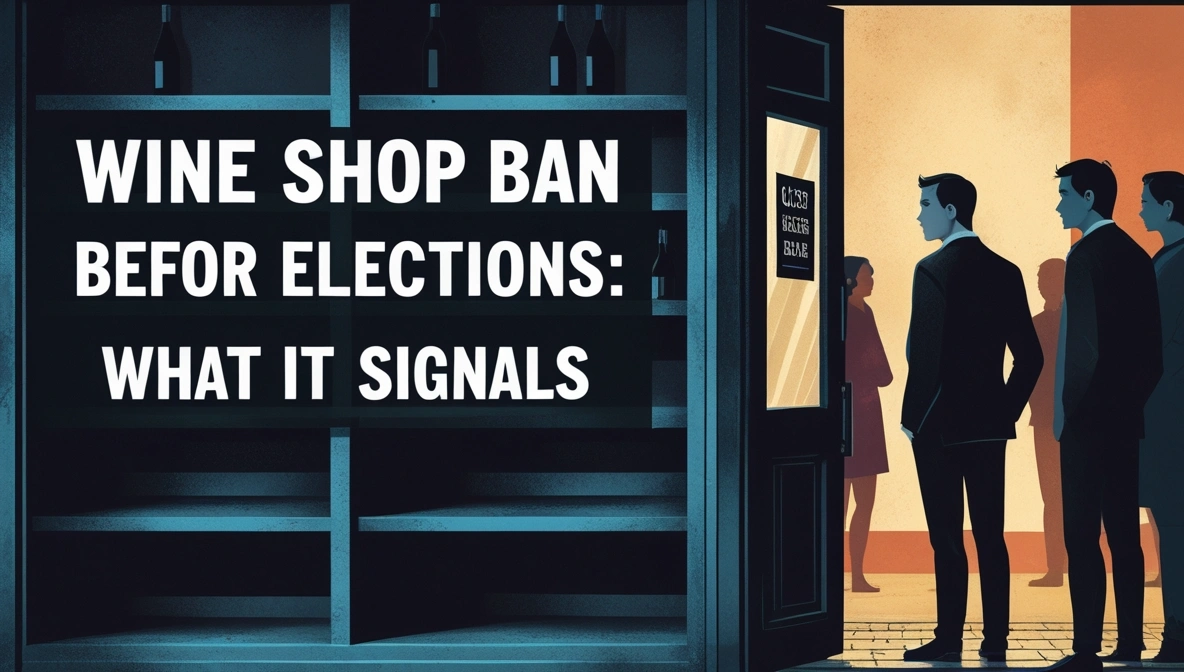
The sudden closure of every wine shop across West Bengal ahead of the 2026 Assembly Elections has raised serious political and administrative questions. What appears to be a routine pre-election restriction is, in reality, a far more aggressive enforcement strategy. This move signals a decisive shift toward stricter electoral control and a zero-tolerance approach to voter inducement.
Unlike previous election cycles, this decision reflects a broader institutional push toward preventive governance. It also highlights the growing role of central oversight in politically sensitive states.
Wine Shop Closures Go Beyond Standard Election Rules
Election guidelines typically require liquor bans 48 hours before polling in specific constituencies. However, the current decision has gone much further.
Instead of limiting restrictions to Phase 1 voting areas, authorities have imposed a state-wide shutdown. Even regions not voting immediately have been included.
This expansion indicates that authorities are not only following Election Commission directives but also anticipating potential loopholes in enforcement.
For broader election coverage and regulatory developments, read:
Election Monitoring in India Explained
Timeline of Closure:
- April 20–23: Complete closure across the state
- April 24–25 (until 6 PM): Temporary reopening
- April 25 (after 6 PM)–April 29: Closure resumes
- May 4: Complete shutdown on counting day
This clearly reflects a preventive strategy rather than basic compliance.
Such extended timelines also suggest coordination between state departments and central election authorities to ensure seamless enforcement.
The Real Reason: Sudden Surge in Liquor Sales
Authorities observed an unusual spike in liquor purchases throughout April. Such patterns are often linked to attempts at influencing voters.
In many Indian elections, alcohol distribution has been a recurring concern. It is often used to influence voter behavior, particularly in closely contested constituencies.
The Election Commission of India (ECI) had already issued strict warnings. District administrations were told to ensure zero tolerance for such practices.
Official guidelines can be referenced here: Election Commission of India
The sweeping closure of every wine shop appears to be a direct response to these warnings.
This also reflects a shift toward data-driven election management, where consumption patterns trigger enforcement actions.
Election Commission’s Assertive Role
The Election Commission has taken a much stronger stance this time.
Recent actions include:
- Reassigning key officials
- Removing certain officers from election duties
- Increasing monitoring across districts
Related insight:
How ECI Controls Election Integrity
These steps indicate a clear intention to ensure free and fair elections. While political objections have been raised, such interventions fall within the Commission’s constitutional powers under Article 324. In sensitive electoral environments, proactive oversight becomes essential. It helps prevent irregularities before they escalate.
Political Tensions behind the Decision
The aggressive enforcement has also intensified tensions between the state government and the Election Commission.
Concerns have been raised regarding:
- Appointment processes
- Administrative authority
- Central oversight
However, from an institutional perspective, these measures reflect an effort to maintain electoral integrity.
The focus remains on preventing malpractice and ensuring transparency.
Experts argue that such friction is not unusual in high-stakes elections. It often emerges when regulatory bodies enforce stricter compliance mechanisms.
What This Means for the 2026 Elections
This is not just about shutting down a wine shop network. It represents a larger shift in how elections are being managed.
Key takeaways:
- Preventive action is replacing reactive measures
- Data-driven decisions are guiding enforcement
- Institutional authority is being exercised more strongly
Read more:
India’s Changing Election Strategy – https://www.news2world.com/india-election-strategy
These developments suggest that the 2026 elections will be among the most closely monitored in recent history.
This also sets a precedent for future elections, where stricter enforcement could become the norm rather than the exception.
FAQs
Why were wine shops closed across West Bengal before elections?
Wine shops were shut to prevent voter inducement and ensure fair elections.
Is liquor ban before elections common?
Yes, but usually limited to 48 hours before polling, not state-wide.
Why was the ban applied across the entire state?
To prevent loopholes and control unusual spikes in liquor sales.
What role does the Election Commission play?
The ECI ensures free and fair elections and enforces strict compliance.
Conclusion
The closure of every wine shop in West Bengal ahead of elections is more than an administrative step. It reflects a deeper commitment to clean and fair voting. With stricter enforcement and increased oversight, the focus is clearly on ensuring that electoral outcomes are not influenced by illegal inducements. This approach, though disruptive, strengthens democratic processes and builds greater voter trust.
Shruti Singh is a passionate writer having 6 years of writing and editing experience. Through her articles on news2world, she explores the connection between people, planet, and everyday choices, translating complex information and issues into clear, engaging, and practical insights. Her work aims to inspire readers to adopt eco-friendly habits, think critically, and contribute meaningfully to a more comfortable future.