
Best Colleges in India for Commerce Students (2026 Guide)

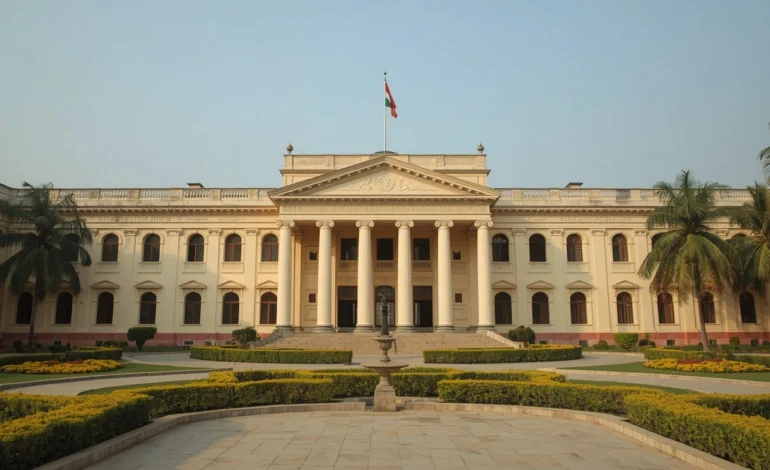
The best colleges in India for commerce students right now are Shri Ram College of Commerce (SRCC), Hindu College, Hansraj College, Lady Shri Ram College (LSR), Loyola College Chennai, and Narsee Monjee College of Commerce & Economics (NMIMS Mumbai) — based on subject-specific rankings and the latest available NIRF data. But before you shortlist based on any “top commerce colleges” list online, there’s one confusion worth clearing up immediately: NIRF, India’s official ranking body, doesn’t actually rank colleges by commerce as a separate category. Most lists blend two different ranking systems without saying so, which changes how you should read them.
What “Best Commerce College” Actually Means in India
The National Institutional Ranking Framework (NIRF), run by the Ministry of Education, ranks colleges under a general “College” category based on Teaching & Learning Resources, Research, Graduation Outcomes, Outreach & Inclusivity, and Peer Perception — it does not have a separate commerce-specific category. So when you see “SRCC ranked #1 in commerce,” that figure is usually coming from a subject-wise survey by India Today, The Week, or Outlook, not from NIRF directly. NIRF instead shows where a college stands overall, across all its departments combined.
This matters because a college can rank very differently on the two scales. Hindu College, for instance, sits at #1 in NIRF’s overall College category, while SRCC — widely seen as India’s top commerce college by employers and subject rankings — sits much lower on NIRF’s overall list, simply because SRCC is a single-stream commerce institution competing against multi-department colleges on metrics like research output.
Who Should Care About This
- Class 12 commerce students preparing CUET or state-level entrance applications for the 2026-27 academic year
- Parents comparing colleges on brochures that cite rankings without specifying which ranking system
- Students choosing between Delhi University, Mumbai, Chennai, or Kolkata as a base for their commerce degree
- CA, CS, or MBA aspirants who want a college with strong placement pipelines into these professional tracks
- Students confused by conflicting “NIRF 2026” claims online — more on this below, since this is actively misleading a lot of applicants right now
Step-by-Step: How to Actually Shortlist a Commerce College
- Check subject-specific rankings, not just NIRF overall rank. Look at India Today’s or Outlook’s commerce-specific survey alongside NIRF’s general College ranking — the two tell you different things.
- Confirm the entrance route. Most top colleges now admit through CUET (Common University Entrance Test) scores rather than Class 12 marks alone; a few state and autonomous colleges still use direct merit-based admission.
- Check last year’s cutoff, not this year’s expected cutoff. Cutoffs shift by 1-3% each year depending on applicant volume — use the previous year’s figure as a floor, not a guarantee.
- Compare fee structures realistically. Government-aided DU colleges often charge ₹25,000–35,000 a year for B.Com, while private universities can run ₹2 lakh–10 lakh+ for the full course, especially for specialized programs like B.Com with ACCA or CFA integration.
- Look at placement data by specifics, not averages. A college advertising a ₹62 lakh “highest package” tells you almost nothing about your likely outcome — ask for median package and placement percentage instead.
- Visit the CUET or college’s own admission portal directly to apply, rather than through third-party aggregator sites that may show outdated fee or seat information.
- Shortlist 2-3 safety, 2-3 match, and 1-2 ambitious colleges based on your expected CUET percentile, rather than applying only to the most-searched names.
Common Mistakes and Misconceptions
- Treating “NIRF rank” and “commerce rank” as the same thing. As explained above, they’re built from entirely different methodologies and shouldn’t be read interchangeably.
- Trusting sites claiming NIRF 2026 rankings are already out. As of this writing, the Ministry of Education has not released NIRF 2026 rankings — the most recent official data is NIRF 2025, published September 4, 2025. A few low-quality sites are already circulating “NIRF 2026” college lists, which is inaccurate and worth avoiding as a source.
- Chasing brand-name colleges over course fit. Some colleges rank highly overall but don’t offer specialized commerce tracks (like B.Com with Business Analytics or Accounting & Finance) that better match specific career goals.
- Ignoring location-driven cost of living. A Delhi or Mumbai college’s tuition might look comparable to a Tier-2 city college, but hostel and living costs in metros can add ₹1–2 lakh a year on top.
- Applying based on rank alone without checking CUET-required sections. Different colleges accept different combinations of CUET domain subjects — missing this can disqualify an otherwise eligible applicant.
The Ranking Confusion Most Articles Don’t Explain
Here’s the original comparison most “best commerce college” articles skip — because they either only quote NIRF or only quote a subject-wise survey, not both side by side:
| College | NIRF College Rank 2025 | Commerce Subject Rank (India Today 2025) | City |
|---|---|---|---|
| Hindu College | 1 | 2 | Delhi |
| Miranda House | 2 | — (Arts-focused) | Delhi |
| Hansraj College | 3 | 3 | Delhi |
| Shri Ram College of Commerce (SRCC) | ~18-19 | 1 | Delhi |
| Kirori Mal College | 4 | — | Delhi |
| St. Stephen’s College | 5 | — | Delhi |
SRCC, the most recognized name for commerce specifically, ranks far lower on NIRF’s overall College list than Hindu College or Miranda House — not because it’s academically weaker in commerce, but because NIRF’s overall methodology rewards multi-department research breadth, which a specialized commerce college structurally can’t compete on. If you’re comparing colleges purely by NIRF number, you’d wrongly conclude SRCC is a second-tier option. It isn’t — you’re just reading the wrong ranking for the question you’re actually asking.
Official Sources
- nirfindia.org — official NIRF rankings (2025 edition is the latest published, released September 4, 2025; the 2026 edition has not yet been released as of this writing)
- CUET official portal (exams.nta.ac.in/CUET) — for entrance exam registration and college-wise cutoffs
- Individual college websites for verified fee structures and seat matrices, rather than third-party aggregators alone
Frequently Asked Questions
1. What are the best colleges in India for commerce students in 2026?
SRCC, Hindu College, Hansraj College, LSR, Loyola College Chennai, and NMIMS Mumbai consistently rank among the top choices, based on subject-wise commerce surveys and available NIRF data.
2. Is NIRF ranking the same as commerce-specific ranking?
No. NIRF ranks colleges under a general “College” category across all departments; commerce-specific rankings come from separate surveys by India Today, The Week, or Outlook.
3. Has NIRF released its 2026 rankings yet?
No, as of this writing NIRF 2025 (released September 2025) remains the latest official edition; 2026 rankings are expected later in the year, and any site claiming otherwise should be treated with caution.
4. What entrance exam is needed for top commerce colleges in India?
Most top colleges, including Delhi University constituents, now admit primarily through CUET scores rather than Class 12 marks alone.
5. What is the fee range for a B.Com degree at top Indian colleges?
Government-aided colleges typically charge ₹25,000-35,000 a year, while private universities with specialized or international-affiliated programs can range from ₹2 lakh to over ₹10 lakh for the full course.
6. Is SRCC still the top commerce college in India despite a lower NIRF rank?
Yes — SRCC’s lower NIRF overall rank reflects NIRF’s multi-department methodology, not a decline in commerce-specific quality, where it continues to rank #1 in subject-wise surveys.
7. Which cities have the best commerce colleges outside Delhi?
Mumbai (NMIMS, HR College), Chennai (Loyola College), Kolkata, and Kochi/Ernakulam all have strong commerce college clusters as alternatives to the highly competitive Delhi options.
Conclusion
Finding the best colleges in India for commerce students isn’t just about copying whichever list ranks highest on Google — it means knowing which ranking system you’re actually looking at, since NIRF and subject-specific commerce rankings measure very different things and can disagree sharply on the same college. Check both, verify cutoffs directly with the college or CUET portal, and shortlist based on course fit and realistic cost, not just brand recognition.
Shruti Singh is a passionate writer having 6 years of writing and editing experience. Through her articles on news2world, she explores the connection between people, planet, and everyday choices, translating complex information and issues into clear, engaging, and practical insights. Her work aims to inspire readers to adopt eco-friendly habits, think critically, and contribute meaningfully to a more comfortable future.