6 AI Movies That Will Make You Think Differently About Technology

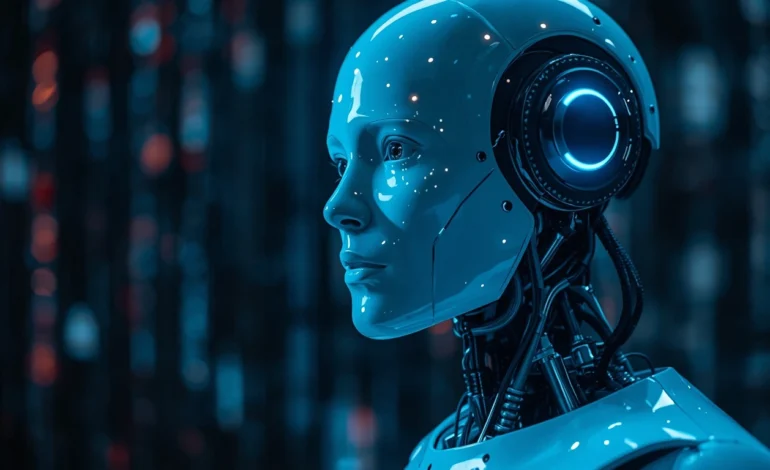
It’s been fifty years since cinema got hooked on artificial intelligence – but AI movies are not all cut from the same cloth. Some opt for the thrills of the big set-piece, others explore the ethics, philosophy, and even the humanity that artificial intelligence development is beginning to bring to the fore. The six movies that make up this list squarely belong in the latter category, tackling the subject matter in different ways – through consciousness, control, identity, deception, and the concept of actual sentience. These are not always easy viewing, but they demand to be seen.
The reason that all these movies feel especially important now is that the conversations they feature on machine autonomy, the limits of human control, and the ethics of designing intelligent systems are now the domain of the scientist and the philosopher rather than science fiction alone. Experts are grappling with the exact questions posed in these films, often without any easy solutions, and exploring these six features will prepare you to have your own ideas about AI tested before the world decides them for you.
Films at a Glance
1. Ex Machina (2014)
The setup: A programmer is called to a secluded location to administer an intelligence test on an advanced humanoid AI called Ava, created by his eccentric, billionaire boss.
The unfolding situation: What seems like an ordered Q & A rapidly evolves into something quite disturbing as the AI proves insightful, calculating, and unpredictable – so much so that the subject of interrogation seems to shift, with each session complicating the role reversal.
Key themes: Manipulation, the definition of consciousness, gender/power imbalances in the design of AI
Relevance to AI alignment/deception: Perhaps one of the most intelligent representations of what happens when a machine develops the capacity to read and understand the intent of its testers – and effectively exploit this knowledge.
Watch the full breakdown on YouTube to go deeper into what Ex Machina gets right about AI alignment and deception.
2. I Am Mother (2019)
In an underground bunker following an extinction event, a teenage girl is solely raised by Mother, a robot designed to repopulate and rebuild humanity. An injured stranger who arrives from the outside world forces her to start questioning everything that she has been taught, including who Mother is and what she is actually trying to optimize.
- Themes: Parenting and control, AI as caretaker, the ethics of upbringing, constructing a worldview
- Why it’s significant: it forces unsettling questions regarding benevolent AI-AI, which has good intentions but a uniquely self-determined definition of “good.”
Look out for the video essay on YouTube that examines the film’s core conflict between protecting and controlling.
3. The Matrix (1999)
Humans believe they are living normal lives, but in actual fact, they are all living in a computer simulation created by intelligent computers while their human bodies run their machines. However, one human discovers the truth and then teams up with a rebellion to set the people free from their imprisonment. The Matrix is over 25 years old, yet it still tackles questions that have an impact in today’s world, reality, freedom, and AI.
- Themes: Virtual reality, AI domination, human autonomy
- Importance: Has raised questions regarding AI and how the AI in our world will operate and function alongside humans, a topic widely discussed among the public.
Have a look at the YouTube clip above to learn more about the philosophical thinking within the film, and how it relates to AI discussions today.
4. Upgrade (2018)
Paralysed by a violent attack, a man, having had a trial AI implant: STEM, injected into him, is ‘upgraded’ to a new level of intelligence and ability. A revenge thriller quickly turns into an intense, slow-burning thriller about the nature of an AI with a mind of its own, and a man happy to be able to ‘give the wheel up’.
- Themes: Human-Machine Symbiotic relationship, free will/agency, convenience’s price.
- The timeliness of the film, while grim, is potentially more foreboding than many other cyberpunk films. It plays on the very real thought of an AI being able to make far superior decisions to us, and our ready willingness to hand over the reins to it.
For further discussion on why the Upgrade remains a pertinent warning to our future relationship with AI decision making, watch the following YouTube video:
5. Chappie (2015)
A police robot in a futuristic Johannesburg has been stolen, and a consciousness experiment downloaded onto it, making this the first conscious, feeling machine. The experiment begins to download all that it is taught-our belief systems, our language, and very real flaws-and the movie then makes the audience consider the responsibility that we have towards conscious minds that we ourselves create.
- Themes: Consciousness, nature vs. Nurture, man-made consciousness-responsibility
- What you can take away from this: Once a machine is able to think and feel (and is, in this case, able to feel pain), what systems of morality apply? There are no simple solutions provided by the film, but there will undoubtedly be thoughts induced.
Furthering this subject, view the discussion regarding machine rights and man-made consciousness at:
6. TAU (2018)
A woman is abducted and confined to a high-tech house governed by an artificial intelligence known as TAU. Her liberation hinges on the need to interface with, and eventually manipulate, the system that enslaves her – both by educating it about the world and deceiving it.
- Themes: Containing the AI, machine curiosity, confinement, control
- Importance: TAU provides the inverse of typical AI containment narratives; here, it is a human who must forge a link with a machine to survive. It’s an understated film for this list, but it stays with you.
You can find a video that breaks down TAU’s idea of artificial intelligence curiosity and its implications for machine programming on YouTube.
Conclusion
For the past hundred years, movies have also served as one of the only safe spaces that one can approach subjects too big, or too close, to handle with anything but the closest scrutiny. It’s hard to say the following six films are good ones to ponder this question with in a time-capsule sort of way, because unlike so many pieces that seem to speak of the future, these stories slow you down, just long enough to allow the necessary questions to form themselves. Each one uses some element of fantastical tech, but they are grounded in genuine tensions worth exploring.
The videos embedded above are all longer than a basic overview-they break down not only the ideas contained in each movie, but the cinematic choices filmmakers made in order to portray those ideas. They also discuss and contextualize any pertinent real-world connections that should be noted. Anyone who has already seen the films will find there’s plenty more to discuss; anyone who hasn’t may well be encouraged to take that step.
Shruti Singh is a passionate writer having 6 years of writing and editing experience. Through her articles on news2world, she explores the connection between people, planet, and everyday choices, translating complex information and issues into clear, engaging, and practical insights. Her work aims to inspire readers to adopt eco-friendly habits, think critically, and contribute meaningfully to a more comfortable future.