


Places to visit in Dharamshala – where do I start? There is a particular kind of silence you find in Dharamshala. It arrives unexpectedly — between the chanting of monks, the ringing of prayer bells, and the distant rush of a waterfall somewhere in the pine forest. You came for the mountains. You stay because something here quietly rearranges your priorities.
Nestled in the Kangra Valley of Himachal Pradesh at the foot of the mighty Dhauladhar range, Dharamshala is often called India’s “Little Tibet” — and for very good reason. It is the home of His Holiness the 14th Dalai Lama, a thriving hub of Tibetan culture, and one of the most layered, surprising, and genuinely moving places to visit in all of North India.
Whether you are a trekker, a spiritual seeker, a history lover, or simply someone who needs mountains badly — Dharamshala delivers. Here are the 8 best places to visit in Dharamshala, explored in proper detail so you can plan your trip without missing a single moment.

1. McLeodganj — Little Lhasa, Big Soul
The place where Dharamshala truly begins
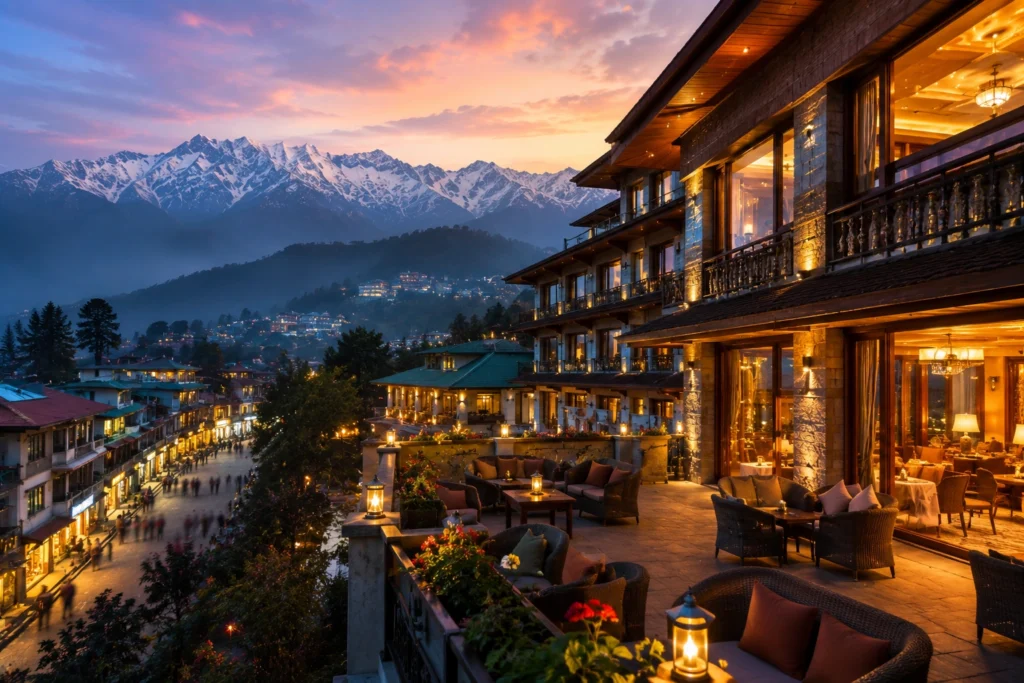
If Dharamshala is a destination, McLeodganj is the experience. Situated about 9 kilometres north of lower Dharamshala, this upper hill suburb has been the headquarters of the Tibetan government-in-exile since 1960 — when His Holiness the Dalai Lama arrived here after fleeing Tibet following China’s invasion. The Tibetan community has lived, thrived, and built an entire world here in the decades since, and it shows in every prayer flag, every momo stall, and every hand-painted thangka hanging in a shopfront window.
Walking through McLeodganj feels like stepping into two worlds simultaneously. Tibetan monks in saffron robes share narrow lanes with Israeli backpackers, Japanese yoga practitioners, and Indian families on weekend escapes. The main square buzzes with cafés serving Tibetan butter tea alongside wood-fired pizza. Everywhere you look there is colour — in the prayer wheels spinning along the Kora path, in the patterned blankets draped over market stalls, in the rhododendrons growing wild at the edges of the road.
What to Do in McLeodganj
- Walk the Kora (circumambulation path) around the Tsuglagkhang Complex at dawn alongside resident monks — one of the most calming things you can do in the Himalayas
- Browse the Tibetan Refugee Market for handcrafted jewellery, wooden boxes, singing bowls, and thangka paintings
- Eat momos at Lung Ta, Jimmy’s Italian Kitchen for the views, or any tiny dhaba that smells good
- Take the Dharamshala Skyway ropeway — 1.8 km in 5 minutes, the valley dropping away beneath you
Key Details
- Distance from Dharamshala: 9 km | Best time: March–June, September–November
- How long: Plan a full day, minimum
2. Tsuglagkhang Complex (Dalai Lama Temple) — The Spiritual Heart of Dharamshala
One of the most important Buddhist sites outside Tibet
The Tsuglagkhang Complex is the reason millions of people have heard of Dharamshala. This vast spiritual complex — located in the heart of McLeodganj — is the official residence of His Holiness the 14th Dalai Lama and the most significant Tibetan Buddhist site in India. Visiting it is one of the most profoundly moving experiences available among all the places to visit in Dharamshala.
The complex is anchored by the Tsuglagkhang Temple itself — a soaring structure that houses three enormous statues: Avalokiteshvara (the Bodhisattva of Compassion), Padmasambhava (Guru Rinpoche), and a towering, serene golden Buddha seated on an elevated pedestal. The air inside is thick with incense and the murmured sound of prayer. Monks sit in rows reading scriptures. Pilgrims from across Asia — and increasingly from across the world — circumambulate with rosaries clicking softly through their fingers.
Within the same complex sits Namgyal Monastery — the Dalai Lama’s personal monastery, home to over 200 monks who perform elaborate rituals and debate Buddhist philosophy under the open sky. The Tibet Museum is housed here too: a deeply affecting collection of photographs, documents, and artefacts documenting the history of Tibet’s occupation — essential viewing for understanding why this community is here.
What to Do at Tsuglagkhang
- Attend the early morning prayers (5:00 AM–6:00 AM) — the chanting echoes across the valley in the pre-dawn dark
- Visit the Tibet Museum for historical and cultural context before exploring the rest of McLeodganj
- Spin the large prayer wheels along the outer wall — a simple, meditative act that locals do every day
- If you’re fortunate, time your visit to coincide with one of the Dalai Lama’s public teachings (check the official website for schedule)
Key Details
- Dress code: Modest clothing, remove shoes before entering the temple
- Photography: Permitted in most areas; be respectful and avoid flash
3. Triund Trek — The Trek That Converts Non-Trekkers
9 km of trail that changes how you see mountains
Triund is not just the best trek near Dharamshala — it is, for many travellers, the trek that turns a casual hill station visitor into a committed Himalayan wanderer. A small hill in the Kangra district sitting at 2,842 metres above sea level, Triund rewards a simple 9 km trail from McLeodganj with views so outrageous they feel almost rude.
The trek takes 2 to 4 hours depending on pace and fitness. The trail passes through a dense oak and rhododendron forest that dapples morning light across your path before opening, dramatically, onto the ridge. And then the view arrives: the snow-capped Dhauladhar range on one side, the entire Kangra Valley rolling away in green waves on the other. The effect is instant and total. You stop walking. You probably say something inadequate. You take approximately forty photographs that will never capture it.
Triund is also one of the finest camping spots in all of Himachal Pradesh. Sleeping here under a sky stuffed with stars, with the Dhauladhars glowing blue in the moonlight and the valley lights twinkling far below — this is the kind of night that gets mentioned at dinner parties for years.
Triund Trek Essentials
- Starting point: Gallu Devi Temple, McLeodganj (accessible by auto or taxi)
- Trek distance: 9 km one way | Elevation: 1,457 m (McLeodganj) to 2,842 m (Triund)
- Difficulty: Easy to Moderate — suitable for first-time trekkers
- Time: 2–4 hours up, 1.5–3 hours down
- Best months: March–May and September–December (trail closed January–February)
- Tip: Carry enough water — the trail has limited sources after the Magic View Café checkpoint at the halfway mark. Start early for the best weather and softest light.
4. Bhagsu Waterfall & Bhagsunath Temple — Nature and Devotion, Side by Side
The 30-minute walk every Dharamshala visitor must take
Just 2 kilometres from McLeodganj Main Square along a trail lined with cafés, art shops, and guesthouses, Bhagsu Waterfall is one of the most visited — and most genuinely lovely — natural attractions among all the places to visit in Dharamshala. The falls cascade from a height of approximately 30 feet through a narrow rocky gorge, surrounded by lush green slopes of the Dhauladhar foothills. In monsoon, the volume doubles and the sound is thunderous; in spring, the water runs clear and ice-cold and perfect.
The trail to the waterfall passes through Bhagsu village — a small settlement full of cafés run by long-stay travellers, colourful murals, and a laid-back creative energy that has made it a favourite base for digital nomads and artists. The Shiva Café perched directly above the falls, has a view that compensates entirely for any delays in the service.
Just below the waterfall sits the Bhagsunath Temple — an ancient Shiva temple dating back to the 18th century and one of the most sacred spots in the Kangra Valley for Hindu devotees. The temple’s architecture, the spring-fed pool within its courtyard, and its mountain setting make it a compelling stop regardless of one’s religious affiliation.
Key Details
- Distance from McLeodganj: 2 km | Trek to falls: 20–30 minutes from temple
- Best time: July–September (monsoon), March–May (clear conditions)
- Tip: Wear shoes with grip — the rocks near the falls get slippery
5. Kangra Fort — 3,000 Years of History in One Hilltop
The oldest fort in the Himalayas, and one of the most underrated
Situated about 20 kilometres from Dharamshala in the town of Kangra, the Kangra Fort is one of the oldest fortifications in the entire Himalayan region — with its first recorded invasion dating to 470 AD. Built by the Katoch dynasty (one of the oldest royal dynasties in the world), the fort has witnessed millennia of invasion, war, earthquake, and empire — including raids by Mahmud of Ghazni, Mughal conquests, Sikh rule, and British administration.
Today, the fort sprawls across 4 kilometres of hillside, its massive stone walls enclosing temples dedicated to Lord Shiva and Lord Vishnu, ornate royal gateways, the ruins of palaces, and — from its highest ramparts — panoramic views of the Baner and Manjhi rivers below and the Dhauladhars in the distance. It is the kind of place that archaeology lovers and history enthusiasts could spend an entire day in without feeling they’ve exhausted it.
The temples within the complex feature intricate carvings depicting scenes from Hindu mythology, and several of the original inscriptions have been preserved. The Archaeological Survey of India maintains the site and has done considerable restoration work.
Key Details
- Distance from Dharamshala: 20 km | How to get there: Taxi or local bus to Kangra
- Tip: Hire a local guide at the entrance (₹200–₹300) — the fort’s full history is impossible to grasp from signage alone
6. Norbulingka Institute — Where Tibetan Art Lives On
The most beautiful cultural institution in Dharamshala
About 7 kilometres from Dharamshala in the village of Sidhpur, the Norbulingka Institute is the kind of place that surprises you — and then holds you for hours longer than you planned. Named after the summer palace of the Dalai Lamas in Lhasa, Norbulingka was established to preserve traditional Tibetan arts that were at risk of disappearing following the exile of the Tibetan community.
Walking through the institute’s grounds — designed as a traditional Tibetan garden with lotus ponds, prayer flags, and a temple at the centre — you encounter workshops where artisans practise thangka painting, appliqué textile work, wood carving, metal sculpting, and doll making, all through traditional apprenticeship passed down across generations. The skill is extraordinary. The thangka painters work with brushes made from a single animal hair, filling in intricate geometric mandalas millimetre by millimetre.
The Deden Tsuglakhang Temple within the institute houses a remarkable 14-foot statue of the Buddha and walls painted with elaborate murals by resident artists. There is also a café on site serving Tibetan food, which makes a natural break before exploring the shops selling handcrafted goods.
Key Details
- Distance from Dharamshala: 7 km
- Tip: Visit on a weekday morning to see artisans actively working in the studios
7. Dal Lake Dharamshala — The Quiet One Nobody Talks Enough About
Small, serene, and completely underrated
To be clear from the start: this is not the Dal Lake of Kashmir. It is smaller, quieter, and entirely without the shikaras and houseboats. But Dal Lake in Dharamshala — situated at 1,775 metres above sea level near the village of Tota Rani on the McLeodganj–Naddi road — is precisely the kind of place that rewards the traveller who looks beyond the headline attractions.
The lake is ringed by a dense forest of deodar cedar trees, and a small temple on its bank — the Devi temple — adds a gentle spiritual note to an already peaceful setting. Locals come here on weekend mornings to walk the circumference path, feed bread to the fish (a surprisingly meditative activity), and simply sit in the particular silence that pine forests generate.
For families, it’s an ideal picnic spot. For photographers, the reflection of the Dhauladhar peaks in the still water on a clear morning is extraordinary. For anyone who has been overstimulated by the McLeodganj crowds, it is the antidote.
Key Details
- Distance from McLeodganj: 3 km | How to get there: Auto, taxi, or a pleasant 45-minute walk
- Tip: Pair with a visit to Naddi View Point, just 1 km further up the road, for the finest unobstructed views of the Dhauladhar range in the area
8. Dharamkot Village — Where Time Slows Down on Purpose
The quiet village above McLeodganj that long-stay travellers keep secret
Two kilometres above McLeodganj, the road narrows and the crowds thin and the pine trees close in around a small settlement called Dharamkot. This is where travellers come when McLeodganj starts to feel too busy — and where they often end up staying for weeks longer than they intended.
Dharamkot is Dharamshala’s unofficial wellness capital. The Tushita Meditation Centre here runs 10-day silent Vipassana retreats and shorter courses in Buddhist meditation and philosophy that attract practitioners from across the world. Several independent yoga studios offer daily classes at all levels against a backdrop of mountain views through open windows. The cafés are slower here — the kind where your coffee arrives in 15 minutes and nobody seems to mind.
The village is also the trailhead for the trek to Triund and the longer, more challenging trek to Indrahar Pass — making it a natural base for trekkers who want to minimise their approach time. The views of the Kangra Valley from Dharamkot’s edge are expansive and genuinely beautiful at both dawn and dusk.
Key Details
- Distance from McLeodganj: 2 km uphill | How to get there: 30-minute walk, or taxi
- Best for: Long-stay travellers, yoga and meditation retreats, trekking base camp
- Entry fee: Free | Best time: March–June, September–November
- Tip: Book Tushita retreats months in advance — they fill up very quickly for every session
Dharamshala Travel Essentials
| Detail | Information |
| Best time to visit | March–June and September–November |
| Nearest airport | Kangra (Gaggal) Airport — 13 km from Dharamshala |
| Nearest railway station | Pathankot (85 km), Chakki Bank |
| Language | Hindi, Tibetan, Pahari and English |
| Currency tip | Carry cash — ATMs are limited beyond McLeodganj Main Square |
| Must-eat | Momos, thukpa, Tibetan butter tea, Kangra tea, siddu (local bread) |
Conclusion
The places to visit in Dharamshala are not just sights to tick off a list — they are experiences that accumulate into something larger than a holiday. A morning prayer at Tsuglagkhang becomes a memory you carry home. A sunrise from Triund recalibrates your sense of scale. An afternoon in Dharamkot reminds you what unhurried living feels like. Dharamshala gives generously to every kind of traveller. But it gives most generously to those who slow down, turn off the itinerary for an afternoon, and let the mountains do what mountains do. Plan your trip. But leave room for the unexpected.


Shruti Singh is a passionate writer having 6 years of writing and editing experience. Through her articles on news2world, she explores the connection between people, planet, and everyday choices, translating complex information and issues into clear, engaging, and practical insights. Her work aims to inspire readers to adopt eco-friendly habits, think critically, and contribute meaningfully to a more comfortable future.


