


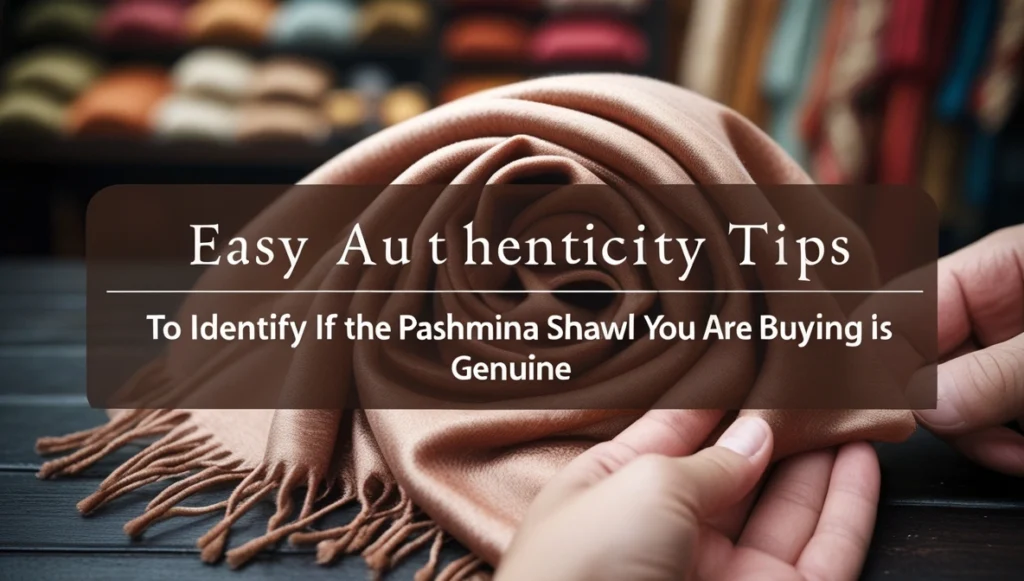
There aren’t many items in India’s high-end textile sector that are as culturally significant—and confusing—as a Pashmina shawl. The Kashmiri shawl has been a sign of wealth, tradition, and skill in weaving for generations. However, that heritage is becoming more cryptic in today’s business world. Doing a quick internet search or perusing store shelves may uncover dozens of alternatives labeled “Pashmina,” some of which may have vastly different prices but look almost identical to the naked eye. In order to safeguard your investment in this enduring luxury and the art of Kashmiri workmanship, it is crucial to understand how to identify if the pashmina shawl i am buying is genuine?
The word Pashmina conjures images of Kashmir’s centuries-old traditions, as well as feelings of gentleness and grace. Handcrafted by artisans for centuries, these shawls are more than just an accessory; they are works of art. The problem is that with the increase in demand around the world, fake goods have also made it to market.
What is the Unique Quality of Kashmir Pashmina?
The story behind Kashmir Pashmina is what makes it so special. It is crafted from the fine undercoat of the Changthangi goat, a mountain goat native to the frozen plateaus of Ladakh. The unusually light and warm Pashmina is made possible by its exceptionally fine fibers, which are often only 12–15 microns thick—much thinner than regular cashmere. It takes weeks—if not months—to complete each piece by manually weaving it on traditional looms. This is why it’s called “the diamond of fibers”—it’s very rare, very beautiful, and hard for a machine to copy.
Several different weaves and embroidery techniques can be found when looking for genuine Pashmina. By familiarizing yourself with these types, you will be better able to spot authentic items and select the style that best suits your requirements.
Identifying a genuine Pashmina Shawl Through a Few Easy-to-Use Tests
Okay, so here’s the major question: how to identify if the pashmina shawl i am buying is genuine? There are a number of realistic ways to tell the actual thing from the fake. The skills of the craftspeople and the seasoned purchasers have been honed through the years.
The Test of Touch
One of the most straightforward methods of recognizing a real Pashmina shawl is to use your sense of touch. Take the shawl and wrap it around your neck. You should be able to feel the real Pashmina’s wonderful softness against your skin. Something unique about it is that, even when left at room temperature, it begins to warm up somewhat the moment you grasp it.
Feel free to run your fingers over the fabric. A small nap or texture distinguishes real pashmina, giving it an organic and natural feel. Comparatively, synthetic materials sometimes have an artificially smooth, slippery, or plasticky feel.
A Burn Test
Most pashmina shawls and other pashmina products can be identified using the burn test. Using a match or lighter, hold a single thread between your tweezers over a non-flammable surface; this will help you identify a real pashmina shawl when you’re shopping.
Conversely, synthetic materials exhibit radically different behaviors. They produce a chemical odor similar to that of burning plastic when they melt instead of burning. Instead of ash, hard, black beads are formed by the residue, and you may see the fiber writhing away from the fire or pouring molten substance.
Stretch Up That Pashmina Shawl
Stretching and releasing a little part of a pashmina shawl will help you identify a real one before you buy it. True pashmina is naturally pliable, so it may be bent or twisted without losing its shape. Conversely, synthetic pashmina either remains stretched or has visibly distorted shapes that do not recover.
- The Ring Test: A real Pashmina blanket can fit through a wedding ring, showing that the fibers are very fine.
- The Static Test: When rubbed, real pashmina creates very little static electricity, whereas synthetic pashmina generates a substantial amount.
how to identify if the pashmina shawl i am buying is genuine? Verifying the Authenticity
As an alternative to using tests to determine whether pashmina is real or not, there is a way to confirm its authenticity without resorting to testing. When you’re actually buying something, whether at a brick-and-mortar store or online, these identifications come in handy.
Analyze the Thread
Flip the shawl over and take a good look at the weave. Weaving traditional jenny with true pashmina adds a heroic touch that leaves a mark on the wearer. Look for patterns in the weave, such as tiny shifts in tension, areas that are noticeably thicker or thinner, or subtle changes in the thread spacing.
These “imperfections” are what make the product genuine. In contrast to the flaws, machine-made fabrics exhibit mechanical accuracy. They are factory-perfect in every way: thread uniformity, spacing, and weave pattern repetition.
Conduct a thorough examination of the edges
Each strand of fringe on a genuine pashmina shawl is slightly different in length and thickness, creating an irregular pattern. The fringes of a shawl are typically bound in loose, basic knots, and closer inspection reveals that each thread is an extension of the main fabric. It is common practice to use a material other than the shawl’s actual fabric while making a fake Pashmina. Warning signs include a noticeable contrast in texture between the fringe and the main fabric, as well as the presence of visible threads that join the two sections.
Verify Governing Body Approval
The Indian government has just instituted a method for certifying Kashmir Pashmina as a Geographical Indication (GI). A product satisfies rigorous standards for authenticity with this certification, which is endorsed by the government (GI No. 46).
Always get GI certification paperwork before purchasing Pashmina if you want to know if the shawl is authentic. Important information included on authentic certificates includes: a unique serial number, evidence of the fibers’ origin and production process, results of quality tests, and official government seals.
The Truth with Regards to Cost
The following are some approximate figures for the Indian market when it comes to authentic Pashmina products:
- Price range: ₹8,000 to ₹18,000.
- Prices for traditional handwoven shawls range from 15,000 to 60,000 rupees.
- Pieces of Kani weaving: ₹75,000 to ₹2,00,000 and more
- Beautiful needlework by Sozni: ₹1,00,000 to ₹3,00,000+
- You can be sure it’s either a synthetic blend or not Pashmina at all if you see “Pashmina” priced at ₹2,000 or ₹3,000.
Understanding Reliable Vendors: The Significance of Manufacturer Registration
A crucial difference between registered manufacturers and internet resellers should be understood before buying Pashmina online. Although many websites claim to be Pashmina experts, in reality, they are just middlemen that buy finished shawls in bulk from Kashmiri makers and then sell them online at a premium. As a result, there are a number of issues with credibility and quality:
- Weaving and materials are not subject to quality control.
- There is no established connection to the weaver group.
- The markups from intermediaries are higher.
- Making sure that labor practices are ethical is challenging.
- Products are not held responsible for their validity.
Who are the most reliable pashmina online retailers?
If they claim to sell Pashmina online, a reliable vendor should have:
- Manufacturer Status with the Jammu & Kashmir Government Department of Handicrafts—In addition to simply registering as a firm, this also grants manufacturer status.
- GI Certification—The Geographical Indication Registry has issued Certificate No. 97 and Registration No. 46.
- Open Heritage Story — Proven ancestry and ties to the trade through family
- Reassurance of Genuineness — Timely refund policies and assurances of genuineness for life
- Certificates from Labs — Scientific confirmation of the fabric’s quality and manufacturing process
- The content is educational, with a focus on teaching about Pashmina rather than solely generating sales.
- The authenticity and heritage worth are officially acknowledged by the government through recognition.
A Guide to the Many Varieties of Genuine Pashmina Shawls
Different varieties of authentic Kashmir Pashmina are made using different techniques and have different qualities. When you buy from real vendors, you’ll mostly find these categories:
Simple Pashmina Wraps
The staple of every Pashmina collection, simple shawls highlight the exquisite artistry of handweaving. These items showcase the inherent sheen of the wool using classic twill weaving methods and come in plain hues. Making a simple Pashmina shawl can take anywhere from six months to eighteen months, but it’s still the most adaptable choice for both casual and formal wear.
The Kani Pashmina: An Art of Weaving
The highest kind of handwoven art is Kani Pashmina. Kani is a method of weaving patterns into fabric rather than embroidery. It involves the use of specialized wooden shuttles and many colored yarns. Careful integration of each pattern element into the weave structure results in designs that are both seamless and unbreakable. Depending on the complexity of the pattern, working on a single Kani shawl might take anywhere from six months to three years.
Items made using the Kani process are known for their long lifespan and intricate design. These shawls are one-of-a-kind masterpieces crafted by skilled weavers with years of expertise.
Exquisite Needle Embroidery with Sozni Pashmina
The traditional Kashmiri needlework known as Sozni makes use of silk threads and needles as small as size 28 to design intricate patterns of flowers and paisley. The Pashmina base is almost undetectable due to the intricate workmanship. The handmade irregularity of Sozni, as evidenced by the tiny variations in each work, is what sets it apart from machine embroidery.
Artisans spend 8 to 10 hours a day stitching together a single Sozni-embroidered shawl, a process that takes two to three years. Because of this, Sozni artifacts are considered high-quality heirlooms that will increase in value as time goes on.
Innovative Reversible Pashmina: Two Designs in One
You may switch it up with your outfit or your mood by wearing the other side of the reversible pashmina, which has two full design compositions in one. This complex method calls for the simultaneous integration of two designs by the weavers, resulting in a multi-shawl ensemble. The execution of reversible motifs requires the extraordinary ability of master weavers. These items are a great investment because they are multipurpose and luxurious all in one.
Why certification is becoming essential?
Due to the increasing sophistication of counterfeit goods, visual inspections are no longer enough. More and more, traceability is defining authenticity. Kashmiri Pashmina’s Geographical Indication (GI) label is still an important quality indicator. It verifies the product’s provenance and its use of time-tested methods. Credibility is further enhanced with additional certificates from schools like CDI Kashmir.
Conclusion
A genuine Kashmir Pashmina is like having a relic from a bygone era in your possession. Its feel carries the history of Himalayan goats, its weave the care and attention of Kashmiri weavers through the years, and its warmth the legacy of centuries of custom. When you shop for authentic Pashmina from reputable vendors you’re getting more than simply a shawl. The world just cannot afford to lose this priceless artistic tradition, and you are doing your part to keep it alive.
how to identify if the pashmina shawl i am buying is genuine? So,when you next hold a Pashmina shawl, keep in mind that it is the product of 3,000 years of history, the result of months of painstaking handcrafting, and the means of subsistence for families who are devoted to this revered tradition.


Shruti Singh is a passionate writer having 6 years of writing and editing experience. Through her articles on news2world, she explores the connection between people, planet, and everyday choices, translating complex information and issues into clear, engaging, and practical insights. Her work aims to inspire readers to adopt eco-friendly habits, think critically, and contribute meaningfully to a more comfortable future.


