
How Is It Possible for Ski Jumpers to Stay in the Air So Long and How Do They Train for That?

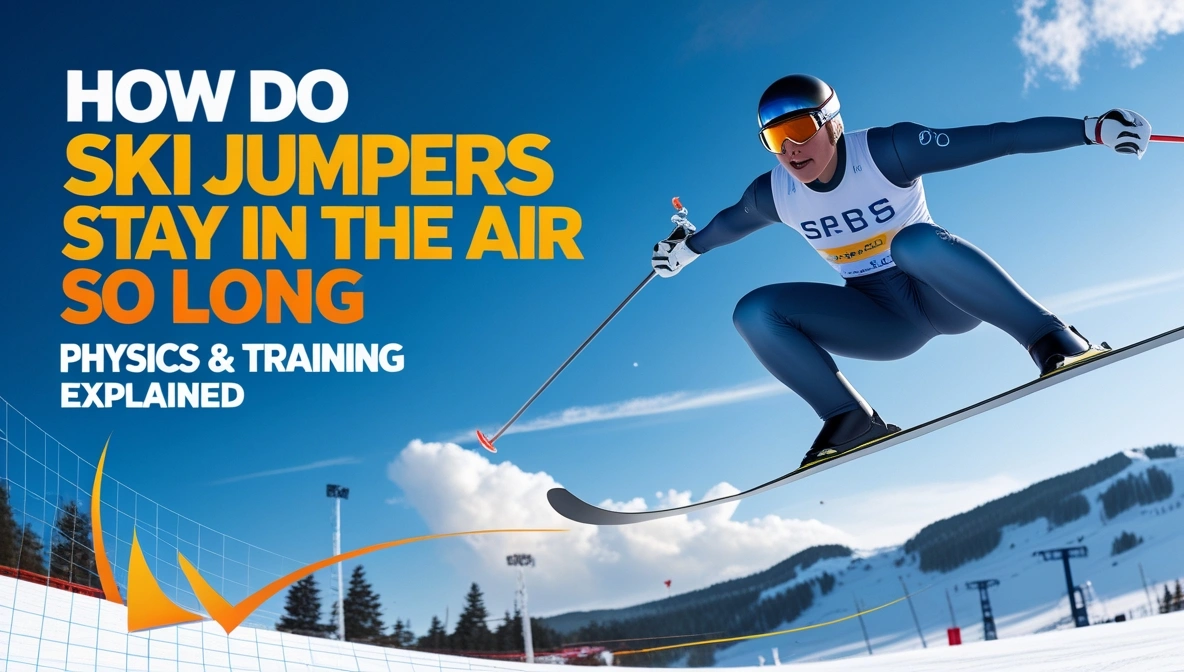
Ski jumping is one of the most visually stunning sports in the world. Athletes launch themselves off steep ramps and glide through the air for several seconds, often covering distances of over 200 meters. This naturally leads to a fascinating question: how is it possible for ski jumpers to stay in the air so long and how do they train for that?
At first glance, it may seem like they are defying gravity. However, the reality is far more scientific. Ski jumpers use aerodynamic principles, precise body positioning, and advanced equipment to maximize lift and minimize descent. Combined with years of specialized training, this allows them to extend their time in the air far beyond what a normal jump would achieve.
The Science Behind Ski Jumping Flight
To truly understand how is it possible for ski jumpers to stay in the air so long and how do they train for that?, we need to examine the physics involved. Ski jumping is governed by three primary forces: lift, drag, and gravity.
Lift: The Key to Staying Airborne
Lift is the most important force in ski jumping. It is the upward force generated when air flows over and under the jumper’s body and skis.
Modern ski jumpers use the “V-style” technique, where the skis are spread apart in a V shape. This increases surface area and allows more air to be deflected downward. According to Newton’s third law, pushing air downward creates an upward reaction force.
Studies have shown that the V-style can increase lift by up to 30% compared to older parallel ski techniques. This innovation alone revolutionized ski jumping in the late 20th century.
Drag: Controlling Air Resistance
Drag is the resistance caused by air as the jumper moves forward. While drag slows the jumper down, managing it correctly is essential.
Ski jumpers wear specially designed suits that allow a controlled amount of air permeability. These suits are regulated strictly in competitions to prevent unfair aerodynamic advantages. Even a slight change in posture can significantly alter drag and affect flight stability.
Gravity: The Constant Force
Gravity pulls the jumper downward at all times. However, because lift partially counteracts gravity, the descent becomes gradual rather than steep.
Interestingly, while horizontal speeds can exceed 90–100 km/h, the vertical drop is much slower. This balance between forward motion and controlled descent is what creates the illusion of floating.
Phases of a Ski Jump
Each phase of a ski jump contributes to answering how is it possible for ski jumpers to stay in the air so long and how do they train for that?
Phases of a Ski Jump
Each phase of a ski jump contributes to answering how is it possible for ski jumpers to stay in the air so long and how do they train for that?
1. Inrun (Acceleration Phase)
The jumper starts from a high ramp and accelerates down a steep incline. The goal is to reach maximum speed while maintaining a stable and aerodynamic posture.
Athletes crouch low to reduce air resistance. Even small movements can disrupt airflow and reduce speed, which directly affects jump distance.
2. Takeoff Phase
At the edge of the ramp, the jumper performs a powerful extension of the legs. This movement converts horizontal speed into upward motion.
Timing is critical. A takeoff that is too early or too late can reduce lift and shorten flight distance.
3. Flight Phase
During flight, the jumper adopts the V-style position. The body is angled forward, and the skis are spread to maximize lift.
Elite ski jumpers constantly make micro-adjustments in the air to maintain balance. This requires exceptional coordination and body awareness.
4. Landing Phase
The landing slope is carefully engineered to match the jumper’s trajectory. This reduces impact and ensures safety.
The preferred technique is the Telemark landing, where one ski is placed ahead of the other. This not only improves balance but also earns higher scores from judges.
Role of Equipment in Long Air Time
Equipment plays a crucial role in answering how is it possible for ski jumpers to stay in the air so long and how do they train for that?
- Skis: Longer and wider skis increase lift by providing more surface area.
- Suits: Designed to optimize airflow while meeting strict regulations.
- Boots and Bindings: Provide stability and allow precise control during flight.
- Helmets and Goggles: Ensure safety without compromising aerodynamics.
Even minor adjustments in equipment can significantly impact performance.
Real Facts and Records
- Ski jumpers can stay in the air for 4 to 7 seconds depending on the hill size.
- The world record jump exceeds 250 meters.
- Speeds during takeoff often reach 90–100 km/h.
- Olympic ski jumping events are held on hills classified as normal hill, large hill, and ski flying hill.
These facts highlight how extreme and technically demanding the sport is.
How Do Ski Jumpers Train for Long Air Time?
Training is the foundation behind answering how is it possible for ski jumpers to stay in the air so long and how do they train for that?
Strength and Power Training
Ski jumpers focus heavily on explosive strength. Exercises such as squats, deadlifts, and plyometric jumps help develop the القوة needed for takeoff.
Strong leg muscles generate the upward thrust required to initiate flight.
Aerodynamic Training
Athletes often train in wind tunnels to study airflow. These sessions allow them to experiment with body positions and improve efficiency.
Even a slight change in head angle or arm position can affect lift and drag.
Technical Training on Ramps
Since snow is seasonal, athletes train on artificial surfaces and water ramps. This allows year-round practice.
These sessions focus on refining technique and improving consistency.
Balance and Coordination Training
Trampolines, balance boards, and gymnastic exercises are used to enhance control. These tools help athletes maintain stability during flight.
Also read:
Mental Training
Ski jumping is mentally demanding. Athletes must remain calm while traveling at high speeds and jumping from heights exceeding 100 meters.
Visualization techniques and mental conditioning help improve confidence and performance.
Safety and Landing Mechanics
Despite the extreme nature of the sport, ski jumping is relatively safe due to careful design and technique.
The landing hill is angled to match the jumper’s descent, reducing the effective fall height. In most cases, the impact is similar to stepping down from a small height rather than falling from a large one.
Evolution of Ski Jumping Techniques
Ski jumping has evolved significantly over time. Earlier techniques used parallel skis, which limited lift. The introduction of the V-style in the 1980s transformed the sport.
Today, athletes rely heavily on scientific analysis, including motion tracking and aerodynamic modeling, to improve performance.
Conclusion
The answer to how is it possible for ski jumpers to stay in the air so long and how do they train for that? lies in a perfect combination of physics, skill, and preparation. By mastering aerodynamics, maintaining precise body control, and undergoing rigorous training, ski jumpers achieve long and graceful flights. What appears to be effortless is actually the result of years of discipline, scientific understanding, and technical perfection.
Shruti Singh is a passionate writer having 6 years of writing and editing experience. Through her articles on news2world, she explores the connection between people, planet, and everyday choices, translating complex information and issues into clear, engaging, and practical insights. Her work aims to inspire readers to adopt eco-friendly habits, think critically, and contribute meaningfully to a more comfortable future.